Let’s be honest. Selling online in India used to mean one thing: list your products on Amazon or Flipkart, play by their rules, and hope for the best. But the Open Network for Digital Commerce (ONDC) has changed the conversation entirely. Suddenly, small businesses, kirana stores, and D2C brands have a seat at the table alongside the big players.
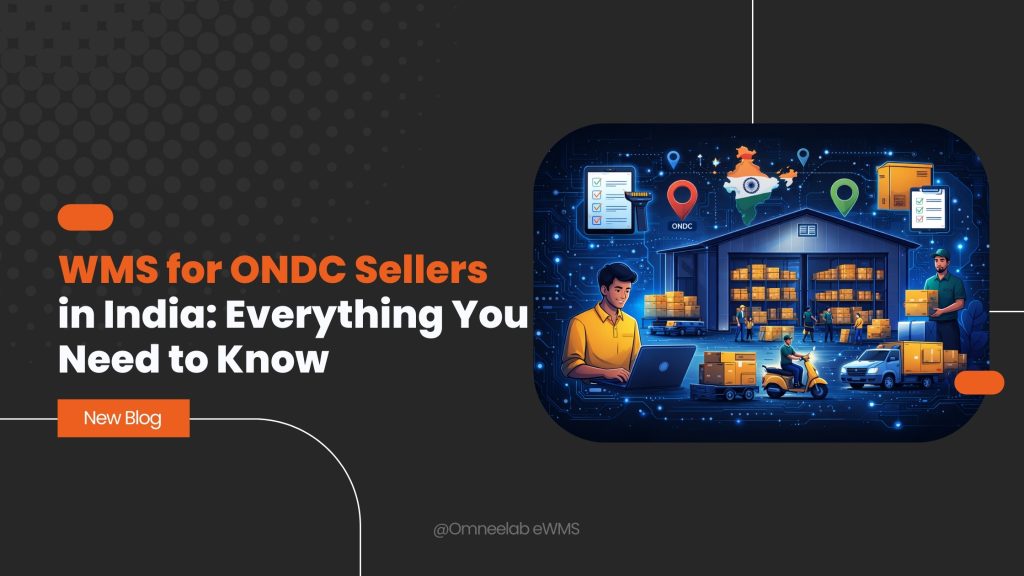
Here’s the catch, though. Having access to a massive digital commerce network doesn’t automatically mean you can handle the flood of orders, keep your inventory accurate, or ship products on time. That’s where a Warehouse Management System (WMS) steps in. If you’re an ONDC seller or planning to become one, understanding how WMS for ONDC sellers works isn’t optional anymore. It’s essential.
In this article, we’ll walk through what ONDC means for sellers, why warehouse management software matters in this ecosystem, and how the right WMS can turn your ONDC selling journey from chaotic to streamlined.
What Is ONDC, and Why Should Sellers Care?
Before diving into warehouse management, let’s quickly set the stage. The Open Network for Digital Commerce is a government-backed initiative designed to democratize e-commerce in India. Unlike traditional marketplaces where a single platform controls everything from discovery to delivery, ONDC works as an unbundled ecommerce network.
Think of it like UPI for payments, but for online shopping. Buyers can use any buyer app (Buyer Network Participant), and sellers can list through any seller app (Seller Network Participant). The ONDC protocol, built on the Beckn protocol, connects everyone through an open gateway.
Why does this matter for you as a seller?
- No platform lock-in. You’re not dependent on one marketplace’s algorithm or policies.
- Lower commissions. ONDC’s structure typically means reduced fees compared to Amazon or Flipkart.
- Wider reach. With ONDC operating across 588+ cities and growing, your products can reach buyers on multiple apps simultaneously.
- Population-scale inclusion. Small businesses and kirana stores that were previously shut out of e-commerce can now participate.
However, this freedom comes with responsibility. You need to manage your own catalogue, inventory, and fulfillment. And that’s precisely where ONDC inventory management through a WMS becomes your best friend. If you’re new to the concept, our comprehensive guide to inventory management systems is a great starting point.
Why Do ONDC Sellers Need a Warehouse Management System?
Picture this. You’re a small business owner in Jaipur selling handcrafted leather goods. You’ve onboarded as an ONDC seller through a seller app like SellerApp or Growth Falcons. Orders start trickling in from multiple buyer apps. Then they start pouring in.
Without a system in place, here’s what happens:
- You oversell products that are already out of stock.
- Orders get mixed up during packing.
- Shipping labels are wrong, and returns pile up.
- You have no idea which SKUs are moving fast and which are gathering dust.
A WMS for ONDC sellers solves all of this by acting as the central nervous system of your warehouse operations. It handles real-time inventory tracking, automates the pick pack ship workflow, generates shipping labels, and syncs stock levels across every channel you sell on.
In short, it’s the difference between running a business and running around in circles. To understand the broader picture of how a WMS fits into your operations versus an order management system, check out this comparison of WMS vs OMS in supply chain management.
Key Features to Look for in a WMS for ONDC Sellers in India
Not every warehouse management software is built for the ONDC ecosystem. When evaluating your options, here are the features that genuinely matter.
Real-Time Inventory Sync Across Channels
This is non-negotiable. If you’re selling on ONDC through one seller app while also running a Shopify store or listing on other marketplaces, your WMS must offer multi-channel inventory sync. The moment a product sells on one platform, stock levels should update everywhere else instantly. Otherwise, you’re staring at overselling nightmares and angry customers. Learn more about why inventory visibility is critical in today’s multi-channel selling environment.
ONDC Seller App Integration
Your WMS needs to connect seamlessly with ONDC-compatible applications and seller network participants. Look for systems that support API integration or webhook-based order sync with popular ONDC seller apps. This ensures orders flow directly into your warehouse system without manual data entry. For a deeper dive into how integrations work, explore our guide on top WMS integration types and benefits.
Order Processing Automation
When orders come in from the ONDC gateway, your WMS should automatically assign them to the right warehouse node, generate pick lists, and trigger the packing process. This kind of order processing automation saves hours of manual work every single day.
Barcode Scanning and SKU Management
Accurate stock keeping unit (SKU) management powered by barcode scanning in the warehouse eliminates picking errors. For ONDC sellers handling hundreds or thousands of SKUs, this feature alone can slash return rates significantly. If you’re considering implementing barcode systems, our article on inventory management with barcode technology covers everything you need to know.
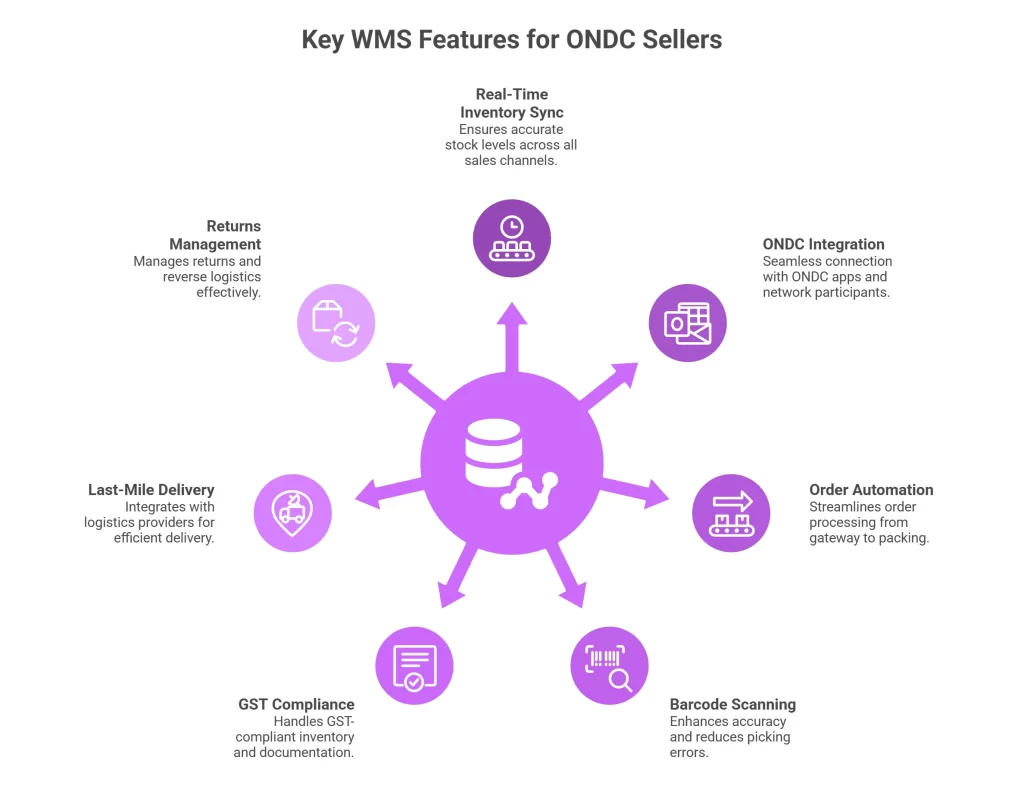
GST-Compliant Inventory and Documentation
India-specific compliance is critical. Your WMS should handle GST-compliant inventory records, support e-way bill automation, and enable proper HSN code mapping. Without these, you’re inviting trouble during audits and tax filings.
Last-Mile Delivery Integration
The best WMS platforms integrate directly with logistics providers like Delhivery, Shiprocket, Dunzo, and LoadShare. This means you can compare shipping rates, print labels, and track deliveries from within your warehouse system. For ONDC sellers, where logistics management can make or break the customer experience, this integration is vital. Our detailed guide on integrating WMS with last-mile delivery in India explains how this works in practice.
Returns Management and Reverse Logistics
Returns are a reality of e-commerce. A solid WMS handles reverse logistics by tracking returned items, updating inventory, processing refunds or replacements, and identifying patterns in returns so you can fix root causes. For a complete breakdown of this process, read our guide on reverse logistics and returns management using WMS in India.
How WMS Integration Works with ONDC: A Step-by-Step Look
Let’s break down the typical flow of how warehouse management for ONDC works in practice.
- Catalogue setup. You create your product catalogue with accurate descriptions, images, and HSN codes. Your WMS stores all SKU data, including dimensions, weight, and storage locations. This supports proper ONDC catalogue management from day one.
- Order received. A buyer on any ONDC buyer app places an order. The order hits your seller app, which pushes it to your WMS through API or webhook integration.
- Inventory check and allocation. The WMS checks real-time stock availability. If you operate multiple warehouse nodes, it uses multi-node inventory allocation to pick the closest or most cost-effective location.
- Pick, pack, and ship. Warehouse staff receive digital pick lists. They scan barcodes, pack the order, and the WMS generates the shipping label automatically through integrated logistics partners.
- Tracking and updates. The WMS sends tracking information back to the ONDC network, so the buyer gets real-time delivery updates.
- Post-delivery. If a return is initiated, the WMS manages the reverse logistics flow, updates stock, and logs the reason for return.
This entire process, when automated through a good WMS, can take minutes instead of hours.
Benefits of Using a WMS for ONDC Sellers
Still wondering if investing in warehouse management software is worth it? Let’s look at the tangible benefits.
- Fewer stockouts and overselling. Real-time inventory tracking means you always know what’s available. No more disappointing customers with cancellations.
- Faster order fulfillment. Automated workflows mean orders get out the door quicker. On ONDC, where multiple seller apps compete for the same buyer, speed is a competitive advantage.
- Lower operational costs. Automation reduces the need for manual labor in picking, packing, and data entry. Over time, this adds up to significant savings.
- Better customer experience. Accurate orders, fast shipping, and smooth returns build trust. And trust drives repeat purchases.
- Scalability. Whether you’re processing 50 orders a day or 5,000, a cloud-based WMS scales with you without requiring a complete overhaul.
- Data-driven decisions. A WMS gives you insights into which products are selling, which warehouse locations are most efficient, and where bottlenecks exist.
Choosing the Best WMS for ONDC Sellers: What to Consider
The Indian market now has several WMS options that cater to ONDC sellers, from established players like GoFrugal to newer SaaS inventory platforms built specifically for the ONDC ecosystem. Here’s how to narrow down your choice. For a broader perspective, our guide on choosing the right warehouse management solution can help you evaluate your options.
Cloud-Based vs. On-Premise
For most ONDC sellers, especially small businesses, a cloud-based WMS makes more sense. It’s cheaper upfront, requires no hardware investment, and can be accessed from anywhere. On-premise solutions are better suited for large enterprises with dedicated IT teams. Learn more about the advantages in our article on the role of cloud retail WMS in supply chain.
Ease of Integration
Check whether the WMS offers pre-built integrations with your ONDC seller app, logistics partners, and any other sales channels you use. The smoother the integration, the faster you’re up and running.
Pricing Structure
Some platforms charge per order, others per user, and some offer flat monthly fees. Calculate your expected order volume and pick a pricing model that won’t eat into your margins as you scale.
Support and Training
Look for vendors that offer onboarding support, training resources, and responsive customer service. When something breaks during a sale event, you need help fast.
ERP Compatibility
If you already use an ERP system for accounting or procurement, ensure the WMS supports ERP-WMS integration. This avoids data silos and keeps your entire operation connected.
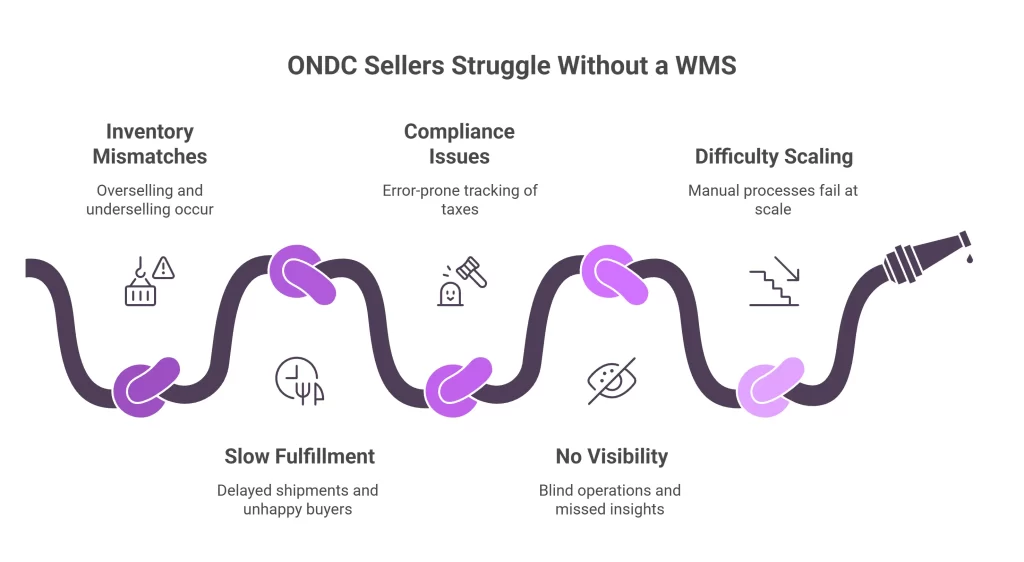
Common Challenges ONDC Sellers Face Without a WMS
To drive the point home, let’s look at what happens when ONDC sellers try to manage everything manually or with spreadsheets.
- Inventory mismatches. Without real-time stock sync, sellers frequently oversell or undersell. This leads to order cancellations and poor seller ratings on the ONDC network.
- Slow fulfillment. Manual picking and packing processes can’t keep up as order volumes grow. Delayed shipments mean unhappy buyers.
- Compliance issues. Tracking GST, e-way bills, and HSN codes manually is error-prone and time-consuming.
- No visibility into operations. Without a WMS dashboard, sellers are essentially flying blind. They can’t identify which products need restocking, which warehouse zones are inefficient, or why return rates are climbing.
- Difficulty scaling. What works for 20 orders a day completely falls apart at 200. Manual processes don’t scale, period.
If these challenges sound familiar, our article on common inventory management challenges dives deeper into solutions.
The Future of WMS and ONDC in India
The ONDC ecosystem is still in its early stages, but the trajectory is clear. With over 370,000 sellers and service providers already on the network, and e-commerce penetration in India growing rapidly, the demand for ONDC-compatible warehouse software will only increase.
We’re likely to see more Technology Service Providers (TSPs) building specialized WMS solutions tailored to the ONDC protocol. Expect deeper integrations, AI-powered demand forecasting, and even more seamless connections between catalogue digitization, inventory management, and last-mile delivery.
For sellers who get their warehouse operations right now, the early-mover advantage is real. While competitors are still figuring out how to manage stock in spreadsheets, you could already have a fully automated fulfillment engine running in the background.
Wrapping It Up
Selling on ONDC is one of the most exciting opportunities for businesses in India right now. The open network levels the playing field, giving small businesses and D2C brands access to millions of buyers without the heavy-handed control of traditional marketplaces.
But opportunity without operational readiness is just chaos waiting to happen. A WMS for ONDC sellers in India isn’t a luxury. It’s the backbone of a successful selling operation. From real-time inventory tracking and order processing automation to GST compliance and last-mile delivery integration, the right warehouse management system handles the heavy lifting so you can focus on growing your business.
Omneelab offers a powerful, cloud-based WMS designed specifically for Indian businesses navigating multi-channel e-commerce, including ONDC. With features like real-time inventory sync, barcode-driven warehouse operations, seamless logistics integrations, and GST-compliant documentation, Omneelab helps sellers of all sizes streamline their fulfillment from day one. If you’re serious about scaling on ONDC, Omneelab is the partner that can make it happen.
If you’re already selling on ONDC or planning to start, now is the time to evaluate WMS solutions that fit your scale, budget, and integration needs. Explore AI-powered inventory and warehouse management tools that can give you the operational edge you need in this rapidly growing digital commerce network.
Your products deserve to reach every corner of India. Make sure your warehouse can keep up.
Frequently Asked Questions
ONDC is a government-backed open network that connects sellers and buyers through multiple apps using the Beckn protocol. Unlike traditional marketplaces, sellers list through Seller Network Participants and can be discovered by buyers across any ONDC-compatible buyer app.
On ONDC, no single platform controls visibility, commissions, or policies. Sellers enjoy lower fees, no platform lock-in, and access to buyers across multiple apps, but they must manage their own inventory, fulfillment, and logistics independently.
Yes. Cloud-based WMS platforms are affordable and easy to set up, helping small sellers automate order processing, manage SKUs, and integrate with logistics partners without needing a large team. Our guide on WMS software for small businesses in India covers this in detail.
A WMS stores all product data including SKU details, HSN codes, and storage locations. Connected to your ONDC seller app via API, it updates stock levels in real time across all channels, preventing overselling and keeping your catalogue accurate.
Even with a small range, a WMS provides real-time inventory tracking, automated shipping labels, and GST-compliant documentation that saves time and reduces errors. Starting early means you won’t need to overhaul operations when order volumes grow.

Kapil Pathak is a Senior Digital Marketing Executive with over four years of experience specializing in the logistics and supply chain industry. His expertise spans digital strategy, search engine optimization (SEO), search engine marketing (SEM), and multi-channel campaign management. He has a proven track record of developing initiatives that increase brand visibility, generate qualified leads, and drive growth for D2C & B2B technology companies.