The days of clipboards, paper pick lists, and manual inventory counts are fading fast. If you’ve ever watched a picker squint at a crumpled sheet while hunting for items in endless aisles, you know there’s got to be a better way. And there is.
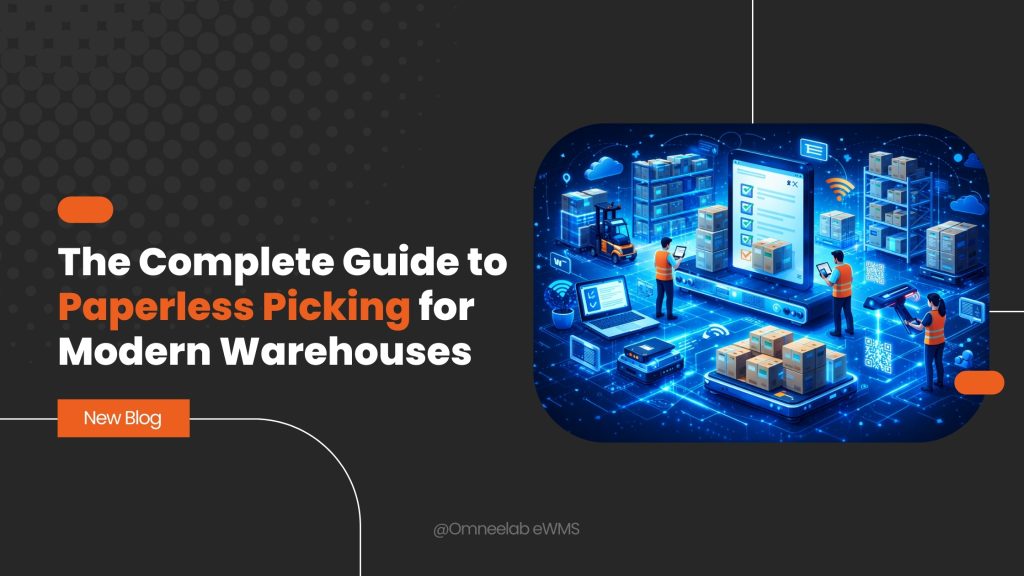
Paperless picking has become the cornerstone of modern warehouse operations, helping businesses slash errors, boost productivity, and keep customers happy. Whether you’re running a small fulfillment center or managing a massive distribution hub, going digital with your picking process isn’t just a nice-to-have anymore. It’s essential for staying competitive.
In this guide, we’ll walk through everything you need to know about paperless picking. You’ll learn what it is, how it works, the technologies behind it, and how to implement it in your own facility. By the end, you’ll have a clear roadmap for transforming your warehouse picking process into a lean, efficient, and error-free operation. Let’s dive in.
What Is Paperless Picking in Warehouse Operations?
At its core, paperless picking means replacing traditional paper-based pick lists with digital alternatives. Instead of handing workers printed sheets that tell them what to grab and where to find it, you equip them with digital tools. These might include handheld scanners, tablets, wearable devices, or even voice-directed systems.
The goal is simple: eliminate paper from the warehouse picking process entirely. But the benefits go far beyond saving trees.
When you switch to digital warehouse picking, you’re essentially creating a real-time connection between your warehouse management system (WMS) and your floor workers. Orders update instantly. Inventory counts stay accurate. And pickers get guided through optimized routes that save time and reduce fatigue.
Think of it like this. Paper-based picking is like using a paper map to navigate a city. Sure, it works. But GPS gets you there faster, with fewer wrong turns. Paperless picking is the GPS for your warehouse. If you’re new to warehouse operations, our introduction to warehouse management covers the fundamentals you need to know.
How Does Paperless Picking Work?
The mechanics of paperless picking depend on the technology you choose. But the basic workflow looks something like this:
- Order comes in – Your e-commerce platform, ERP, or order management system sends the order to your WMS.
- WMS generates pick tasks – The warehouse management system creates digital pick lists and assigns them to workers based on location, priority, or workload.
- Picker receives instructions – Workers get real-time directions on their mobile picking devices, headsets, or through pick-to-light systems.
- Picker locates and scans items – Using barcode scanning or RFID tracking, pickers confirm each item they grab.
- Real-time confirmation – The system updates inventory instantly, and the order moves to the next stage (packing, shipping, etc.).
This closed-loop process means there’s no guesswork. Every pick gets verified. Every inventory adjustment happens automatically. And managers can see exactly what’s happening on the floor at any moment.
For a deeper dive into different picking strategies, check out our guide to warehouse order picking process, methods and types.
Key Technologies Used for Paperless Picking
Not all paperless picking solutions look the same. Depending on your warehouse size, order volume, and budget, you might use one or a combination of these warehouse picking technologies.
Barcode Scanning Picking Systems
This is the most common entry point into paperless picking. Workers use handheld or wearable scanners to read barcodes on shelves and products. The scanner communicates with your WMS to confirm picks and update inventory in real time.
Best for: Small to mid-sized warehouses looking for a cost-effective digital transition.
Learn more about implementing this technology in our detailed guide on inventory management with barcode technology.
Voice-Directed Picking Technology
Also called pick-to-voice systems, this technology uses headsets and voice commands to guide pickers. Workers hear instructions like “Go to aisle 5, bin 12” and confirm picks verbally. This keeps hands and eyes free, which speeds things up considerably.
Best for: High-volume operations where speed and hands-free picking matter.
Pick-to-Light Systems
In this setup, lights mounted on shelves or bins illuminate to show pickers exactly where to go and how many items to grab. It’s incredibly intuitive and reduces training time dramatically.
Best for: Operations with fixed pick locations and high SKU turnover.
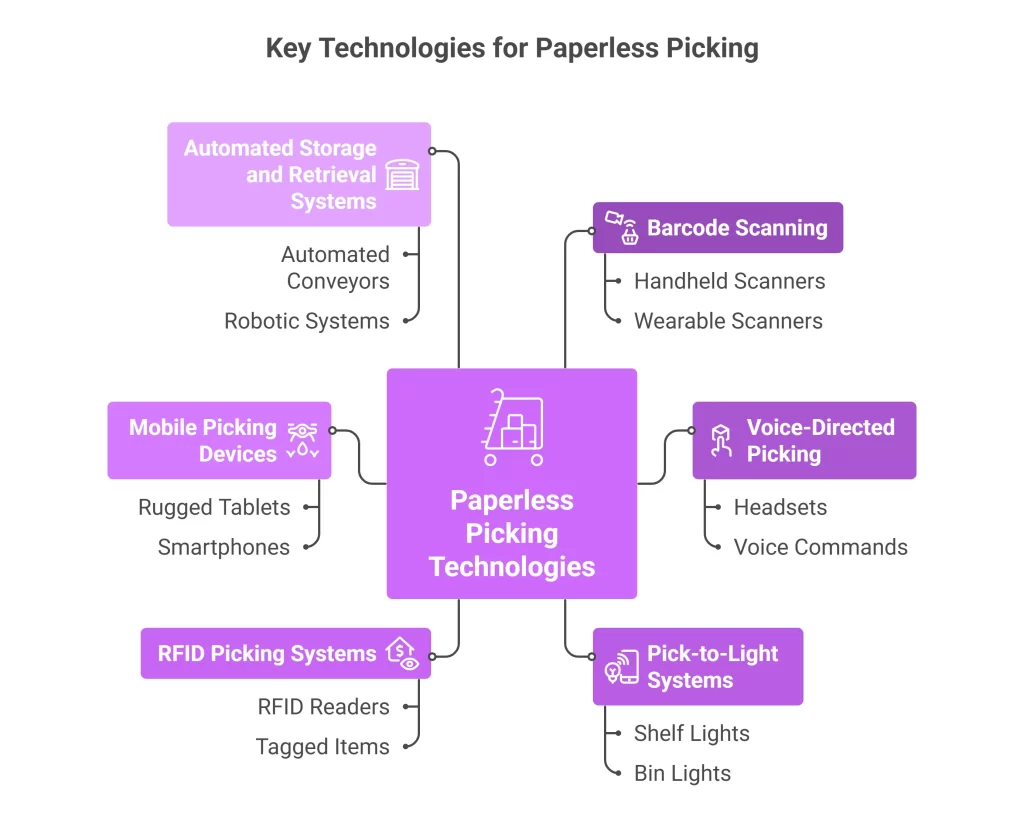
RFID Picking Systems
RFID takes things a step further than barcodes. Instead of line-of-sight scanning, RFID readers can detect tagged items from a distance and even scan multiple products at once. This is especially useful for high-value goods or items that need precise tracking.
Best for: Warehouses handling valuable inventory or requiring detailed traceability.
To understand the full potential of this technology, explore our article on what is RFID technology, how it works and industry benefits.
Mobile Picking Devices and Tablets
Many warehouses equip pickers with rugged tablets or smartphones that display digital pick lists, maps, and instructions. These devices often combine scanning capabilities with visual guidance.
Best for: Flexible operations that need a mix of features without heavy infrastructure investment.
Automated Storage and Retrieval Systems (ASRS)
For larger facilities, ASRS brings goods directly to pickers through automated conveyors, carousels, or robotic systems. This is the high end of warehouse automation, often paired with warehouse robotics picking.
Best for: Large-scale fulfillment centers with high order volumes and budgets to match.
What Are the Main Benefits of Switching to Paperless Picking?
If you’re still on the fence about going paperless, consider these advantages that impact both your bottom line and daily operations.
Improved Picking Accuracy
Paper lists are prone to misreads, smudges, and human error. Digital systems verify every pick with barcode scanning or RFID tracking. The result? Picking accuracy often jumps above 99.9%.
Faster Order Fulfillment
Paperless systems guide workers along optimized pick paths, cutting travel time. Voice-directed picking and pick-to-light systems shave seconds off each pick. Across thousands of orders, that adds up to serious time savings.
Real-Time Inventory Tracking
With every scan, your inventory counts update automatically. No more end-of-day reconciliation headaches. No more surprise stockouts. Real-time inventory tracking means you always know what’s on your shelves.
Reduced Labor Costs and Increased Efficiency
When pickers work faster and make fewer mistakes, you can handle more orders with the same team. That’s a direct boost to labor efficiency and warehouse productivity. Our comparison of manual and automated inventory management breaks down the efficiency gains in detail.
Better Scalability
Paper-based systems fall apart during peak seasons. Digital systems scale effortlessly. Whether you’re processing 100 orders or 10,000, your warehouse picking software handles the load without breaking a sweat.
Enhanced Sustainability
Let’s not forget the environmental angle. Eliminating paper cuts waste and supports sustainability in warehousing. It’s a small change with a measurable impact.
How Do You Implement Paperless Picking in a Warehouse?
Making the switch to paperless picking doesn’t happen overnight. But with the right approach, you can transition smoothly without disrupting your operations.
Step 1: Assess Your Current Warehouse Picking Process
Start by mapping out how orders move through your facility today. Where are the bottlenecks? What’s causing errors? Understanding your baseline helps you set realistic goals and choose the right order picking solutions.
Step 2: Choose the Right Technology
Based on your assessment, decide which paperless picking solutions fit your needs. A small operation might start with mobile picking devices and barcode scanning. Larger facilities might invest in voice-directed picking technology or pick-to-light systems.
Step 3: Select a Compatible Warehouse Management System
Your WMS is the brain behind paperless picking. Make sure it integrates with your chosen hardware and can connect to your ERP, e-commerce platforms, and inventory management systems. Cloud-based warehouse management offers flexibility and easier updates.
Not sure which system fits your needs? Our guide on choosing the right warehouse management solution can help you make an informed decision.
Step 4: Plan Your Rollout
Don’t try to flip the switch on day one. Start with a pilot zone or a single shift. Gather feedback. Iron out the kinks. Then expand gradually across your entire fulfillment center.
Step 5: Train Your Team
Technology is only as good as the people using it. Invest in thorough training so pickers feel confident with new mobile picking devices and digital workflows. Most modern systems are intuitive, but a little practice goes a long way.
Step 6: Monitor, Measure, and Optimize
Once you’re live, track key metrics like picking accuracy, order cycle time, and error rates. Use real-time data analytics to identify opportunities for warehouse picking optimization. The beauty of digital systems is that they generate the data you need to keep improving.
What Are the Costs Involved in Implementing Paperless Picking?
Budget is always a concern, and costs vary widely depending on your approach.
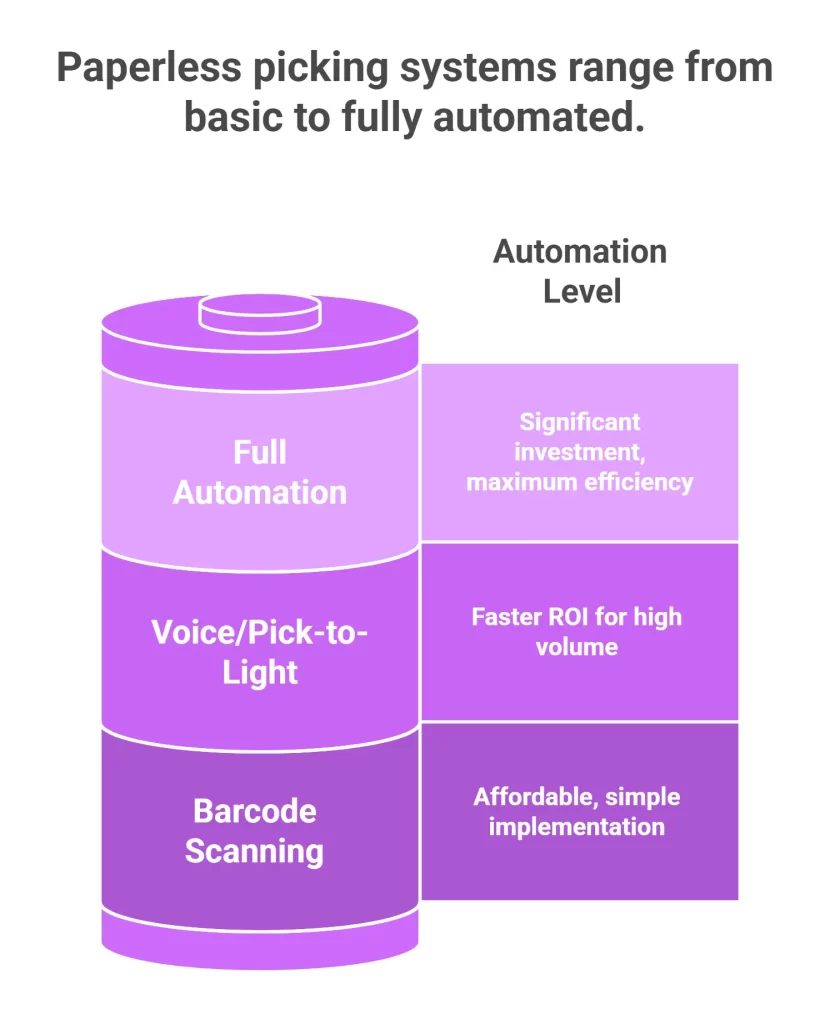
- Entry-level barcode scanning systems can start at a few thousand dollars for hardware and software licenses.
- Voice-directed picking and pick-to-light systems require more infrastructure but deliver faster ROI for high-volume operations.
- Full warehouse automation solutions with ASRS and robotics can run into six or seven figures.
The good news? Many warehouse picking software vendors offer scalable pricing models. You can start small and expand as your business grows. Cloud-based WMS options also reduce upfront costs by eliminating the need for on-premise servers.
When calculating ROI, factor in savings from:
- Reduced labor hours
- Fewer picking errors and returns
- Lower paper and printing costs
- Faster order fulfillment leading to happier customers
Most businesses see payback within 12 to 24 months, depending on their order volume and starting efficiency levels.
Can Paperless Picking Systems Integrate with WMS, ERP, or E-Commerce Platforms?
Absolutely. In fact, integration is what makes paperless picking truly powerful.
Modern warehouse fulfillment software is designed to connect with:
- Warehouse Management Systems (WMS) for inventory control and order routing
- Enterprise Resource Planning (ERP) systems for financial and operational data
- E-commerce platforms like Shopify, WooCommerce, and Amazon Seller Central
- Shipping carriers for automated label generation and tracking
This seamless data flow means orders move from customer checkout to packed shipment without manual intervention. Dynamic order information stays accurate across every system, reducing errors and speeding up last-mile delivery.
For a comprehensive look at connecting your systems, our guide on WMS ERP integration covers best practices and common pitfalls.
What Are Common Challenges When Adopting Paperless Picking?
No transition is without bumps. Here are the most common obstacles and how to overcome them.
Resistance to Change
Some workers are comfortable with paper. Address concerns head-on by highlighting how new tools make their jobs easier, not harder. Involve your team in the selection process and celebrate early wins.
Integration Complexity
Connecting new picking technology to legacy systems can get tricky. Work with vendors who have experience integrating with your existing inventory management systems. Prioritize solutions with open APIs.
Upfront Investment
The initial cost can feel steep. Focus on total cost of ownership rather than just sticker price. Factor in ongoing savings and efficiency gains.
Training Time
Expect a learning curve. Build in extra time during rollout for hands-on practice. Most teams adapt quickly, especially with intuitive pick-to-light systems or voice-directed picking technology.
Which Industries Benefit Most from Paperless Picking?
While any warehouse can benefit from digital picking, some industries see especially high returns.
- E-commerce and retail – High order volumes and customer expectations make speed and accuracy critical.
- Third-party logistics (3PL) – Managing multiple clients and SKUs demands flexible, scalable systems.
- Food and beverage – Traceability requirements and expiration dates make real-time inventory tracking essential.
- Pharmaceuticals and healthcare – Strict compliance and accuracy standards call for error-proof picking.
- Automotive and manufacturing – Complex parts inventories benefit from RFID picking systems and automated order processing.
What Is the Difference Between Pick-to-Light, Pick-to-Voice, and Other Methods?
Understanding your options helps you choose the right fit.
| Method | How It Works | Pros | Cons |
|---|---|---|---|
| Barcode Scanning | Handheld or wearable scanners read product barcodes | Low cost, easy to implement | Requires line-of-sight scanning |
| Pick-to-Light | Lights guide pickers to locations | Fast, intuitive, minimal training | Higher infrastructure cost |
| Pick-to-Voice | Audio instructions via headset | Hands-free, eyes-free | Background noise can interfere |
| RFID | Radio waves read tagged items | No line-of-sight needed, batch scanning | Higher tag costs |
| Mobile Devices | Tablets or smartphones display pick lists | Flexible, visual guidance | Screen visibility in bright light |
Many warehouses combine methods. For example, using voice-directed picking in bulk zones and pick-to-light systems in high-velocity areas.
How Does Paperless Picking Impact Sustainability?
Going paperless isn’t just about efficiency. It’s also a meaningful step toward sustainability in warehousing.
Consider how much paper a busy warehouse consumes. Pick lists, packing slips, inventory counts, and exception reports add up fast. Multiply that by hundreds or thousands of orders daily, and you’re talking about significant waste.
Digital workflow eliminates most of this paper. And when you reduce errors and returns, you also cut down on wasted packaging and shipping emissions.
For companies with environmental commitments or ESG reporting requirements, paperless picking is a straightforward win.
How Does Paperless Picking Affect Scalability?
Growth breaks paper-based systems. As order volumes climb, paper lists multiply, errors spike, and chaos ensues.
Scalable fulfillment requires systems that grow with you. Paperless picking delivers exactly that. Whether you’re handling seasonal peaks or expanding into new markets, digital systems flex to meet demand.
Cloud-based WMS platforms make scaling even easier. You can add users, locations, and integrations without overhauling your infrastructure. Batch picking software and wave picking technology help you process more orders without adding headcount proportionally.
Understanding pick lists in e-commerce warehouse management is essential for optimizing your digital picking workflow.
Best Practices for Successful Paperless Picking Implementation
Here’s a quick checklist to set yourself up for success.
- Start with clear goals – Define what success looks like (e.g., 99.5% accuracy, 20% faster picks).
- Involve frontline workers early – Their buy-in and feedback are invaluable.
- Choose technology that fits your workflow – Don’t over-engineer. Match tools to your actual needs.
- Invest in training – Even simple systems benefit from proper onboarding.
- Monitor KPIs continuously – Use real-time data analytics to spot issues and opportunities.
- Plan for growth – Pick solutions that scale with your business.
Measuring the ROI of Paperless Pickin
How do you know if your investment is paying off? Track these metrics before and after implementation.
- Pick rate – Orders or lines picked per hour
- Accuracy rate – Percentage of error-free picks
- Order cycle time – Time from order receipt to shipment
- Labor cost per order – Total picking labor divided by orders shipped
- Return rate – Percentage of orders returned due to picking errors
Compare these numbers over time. Most businesses see improvement within weeks of going live.
Conclusion
Paperless picking isn’t just a technology upgrade. It’s a fundamental shift in how modern warehouses operate. By replacing paper with digital workflows, you gain accuracy, speed, visibility, and the flexibility to grow.
The tools are more accessible than ever. From simple barcode scanning picking systems to advanced warehouse robotics picking, there’s a solution for every budget and operation size. And with cloud-based warehouse management, getting started doesn’t require a massive upfront investment.
If you’re ready to explore how AI-powered tools and smart warehouse technology can transform your business, now is the time. Start small, measure results, and scale what works. Your future self—and your customers—will thank you.
Ready to modernize your warehouse operations? Explore AI-driven warehouse management solutions and see how digital transformation can boost your efficiency, accuracy, and bottom line.
Frequently Asked Questions (FAQs)
Paperless picking works for businesses of all sizes. Small operations can start with affordable mobile picking devices and barcode scanning systems. As you grow, you can add more advanced pick and pack software or voice-directed picking technology. The key is choosing scalable solutions that match your current needs without overcomplicating things.
Implementation timelines vary based on complexity. A basic barcode scanning setup might take a few weeks. More comprehensive systems involving pick-to-light systems, WMS integration, and staff training typically take two to six months. Starting with a pilot program helps smooth the transition and identify issues early.
Most modern systems are designed for ease of use. Training usually involves a few hours to a few days, depending on the technology. Voice-directed picking and pick-to-light systems are especially intuitive. Ongoing support and refresher sessions help maintain high performance.
Every time a picker scans an item, the warehouse management system updates inventory counts instantly. This real-time inventory tracking means you always have an accurate picture of stock levels. It prevents overselling, reduces stockouts, and makes cycle counting much easier.
Yes. By improving picking efficiency and accuracy, paperless systems reduce labor hours per order, cut down on costly errors and returns, and eliminate paper and printing expenses. Many businesses achieve warehouse cost reduction of 15-30% within the first year of implementation.

Kapil Pathak is a Senior Digital Marketing Executive with over six years of experience specializing in the logistics and supply chain industry. His expertise spans digital strategy, search engine optimization (SEO), search engine marketing (SEM), and multi-channel campaign management. He has a proven track record of developing initiatives that increase brand visibility, generate qualified leads, and drive growth for D2C & B2B technology companies.